Home › Blog › Does Stress Affect Memory?
Stress & the MindDoes Stress Affect Memory? How Chronic Stress Clouds Recall
| The idea | A short jolt of stress can sharpen focus, but ongoing pressure crowds out memory and attention. |
| Why it happens | Stress narrows attention onto the threat and keeps cortisol high, which interferes with encoding and recall. |
| What helps | Sleep, movement, slow breathing, offloading tasks to lists, and moderating caffeine to lower the background load. |
You walk into a meeting and blank on a colleague’s name you have known for years. You reread the same email three times because your mind keeps drifting back to a worry. During a hard stretch, small memory slips seem to multiply out of nowhere. So does stress affect memory? In a word, yes — and understanding the how and the why makes it far less alarming and far more manageable. This guide explains the difference between helpful short-term stress and the chronic kind that clouds recall, what is happening in the brain, and the practical, calm-building daily habits that help you think clearly again.
Does stress affect memory? The honest answer
Stress is not a single thing, and that is why the answer has two halves. A brief, manageable jolt of stress — a looming deadline, a moment of pressure — can actually sharpen attention and help you focus on what matters right now. That is the system working as designed. The trouble starts when stress becomes intense, prolonged or constant. Chronic stress keeps the body’s alarm system switched on long after it should have switched off, and that ongoing activation is what tends to fog memory and scatter focus. So when people ask does stress affect memory, the most accurate reply is: a little, briefly, can help — but a lot, for a long time, works against you.
The National Institute of Mental Health’s fact sheet I’m So Stressed Out! draws the same distinction: a short burst of stress is a normal, useful response, while stress that never switches off is the version that starts costing you.
What stress does inside the brain
When you perceive a threat — physical or emotional — your body releases stress hormones, including adrenaline and cortisol. In the short term these prime you to react. But when cortisol stays elevated for weeks and months, it appears to interfere with the brain regions most central to memory and self-control, including the hippocampus, which helps form new memories, and the prefrontal cortex, which governs attention and working memory. In plain terms, the chemistry that is meant to get you through a crisis becomes counterproductive when the crisis never ends.
There is a simpler, more immediate mechanism too. Under stress, attention narrows onto the source of the threat. That is useful if you are dodging a car, but in daily life it means the ordinary details around you — where you put your phone, what someone just told you — never get properly encoded in the first place. You cannot recall what you never really registered. This overlaps heavily with the everyday slips we cover in why am I so forgetful and the everyday causes of memory lapses.
Why a stressed mind struggles to focus
Working memory — the mental scratchpad that holds a phone number while you dial or keeps your place in a multi-step task — has limited capacity. A worried, preoccupied mind spends much of that capacity running background loops of what-ifs and to-dos, leaving little room for the task in front of you. That is why stressful periods feel scattered: you are effectively trying to think with a smaller mental desk. If concentration is your main struggle, our guide to why you can’t focus and the causes of poor concentration looks at the wider set of factors, with stress high among them.
Stress and memory recall: why the word vanishes
Recall failure under stress is the everyday experience of knowing something and being unable to reach it: the name that will not come during an introduction, the answer that arrives ten minutes after the interview. The memory is intact — that is why it surfaces later, unprompted — but retrieval is an effortful process that competes for the same limited attention that stress is already consuming, and under pressure it loses.
The practical implication is that fighting for the word makes it less likely to arrive, because the effort adds to the load. Naming the blank out loud, taking one slow breath, moving on and letting the retrieval run in the background works far more reliably than straining — and it is the same reason a rehearsed answer holds up under pressure when an improvised one does not.
The stress-sleep-memory triangle
Stress rarely acts alone. One of the most common ways it damages memory is indirectly, through sleep. A racing mind at bedtime means less sleep and lighter, more broken sleep — and since sleep is when the brain files the day’s memories, poor sleep amplifies the forgetfulness stress already causes. It becomes a loop: stress steals sleep, lost sleep worsens focus and mood, and a foggy, irritable day feeds more stress. Our companion guide on how sleep affects memory and focus explains why protecting the night is one of the most effective things a stressed person can do for their memory.
A steady daily companion for focus
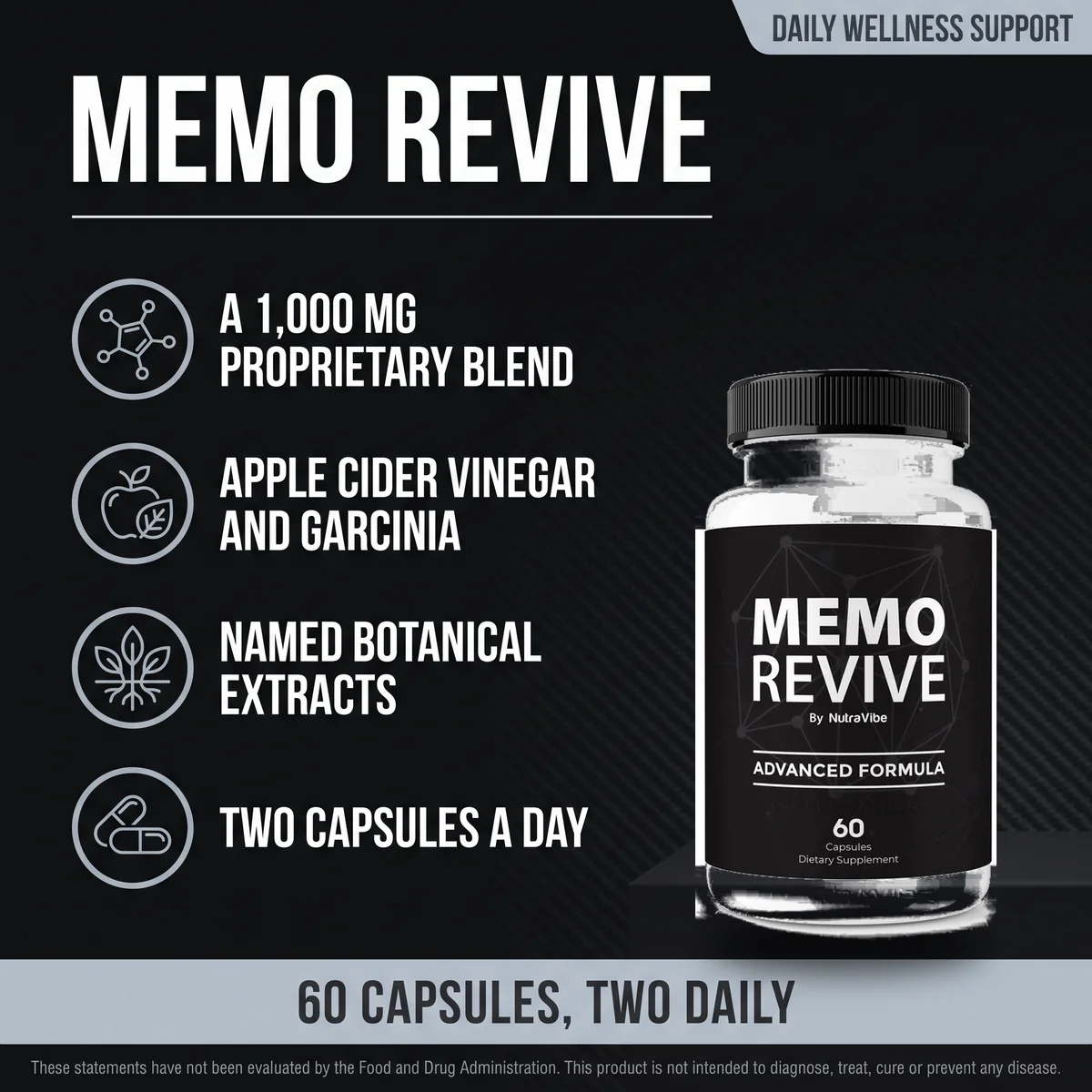
Memo Revive is a two-capsule daily botanical blend for everyday focus and mental-energy support — a calm, consistent layer on top of good stress-management habits, backed by a 60-day guarantee.
See Memo Revive Packages
Daily habits that lower the load
You cannot remove all stress from life, and you would not want to — some of it is what gets us out of bed. The goal is to keep it from becoming a constant background hum that never lets your brain reset. These habits do exactly that.
The American Psychological Association’s overview of how stress affects the body is a useful reminder that the effects are physical as well as mental, which is why the habits below are so ordinary — sleep, movement, company and breathing.
- ✓ Protect your sleep first. It is the single highest-leverage move. A steady bedtime and wind-down routine breaks the stress-sleep loop at its most important point.
- ✓ Move your body most days. Physical activity is one of the most reliable ways to discharge stress and steady mood — even a brisk walk counts.
- ✓ Breathe slowly, on purpose. A few minutes of slow, extended exhales tells your nervous system the threat has passed. It is free, portable and works in the moment.
- ✓ Offload your memory. Write tasks, appointments and ideas down the instant they appear. A trusted list frees working memory that stress would otherwise eat.
- ✓ Keep caffeine moderate. Too much can amplify the jittery, wired feeling of stress and disturb sleep, tightening the loop.
- ✓ Take real breaks. Short pauses between tasks let the alarm system settle rather than run flat out all day.
In-the-moment resets when your mind goes blank
Sometimes stress spikes and your memory stalls right when you need it — mid-presentation, in an exam, during a difficult conversation. A few simple resets can help you get back online without adding pressure.
- ✓ Pause and breathe out slowly. One long exhale can be enough to loosen the grip of a stress spike.
- ✓ Name what you can see. Briefly grounding your attention in your surroundings pulls focus out of the worry loop.
- ✓ Let the blank pass. Chasing a forgotten word often locks it away; move on and it usually surfaces on its own a moment later.
- ✓ Lower the stakes in your head. Reminding yourself that a pause is normal and not a catastrophe takes the pressure off the very system that has stalled.
Two stress-and-memory myths worth dropping
Myth: forgetting under stress means something is wrong with your memory
For most people, stress-related lapses are a sign of an overloaded, distracted brain — not a failing one. When the load lifts, the fog usually lifts with it. Treating everyday stress slips as evidence of a memory problem tends to add worry, which only makes focus harder.
Myth: pushing harder is the way through a stressful patch
Grinding on without rest keeps the alarm system switched on and steadily erodes the sleep, focus and mood you need to perform. Strategic recovery — breaks, sleep, movement — is not a luxury during busy periods; it is what keeps your thinking working.
Where a supplement fits alongside stress management
Managing stress is about habits, boundaries and rest — and for persistent, overwhelming stress, professional support. No supplement replaces any of that. Once your foundations are in place, some people like to add a consistent daily botanical as a supporting layer for everyday focus and mental energy. That is the role Memo Revive is built for — a simple two-capsule daytime routine, not a treatment for stress or anxiety. You can read about the individual plant actives in our guide to natural nootropic botanicals for focus and memory. A supplement is a companion to calm-building habits, not a substitute for them, and not a treatment for any condition.
Botanicals marketed for calm are no exception to the usual rule: check the herb in the National Center for Complementary and Integrative Health’s Herbs at a Glance before you assume the label is describing evidence.
A note on expectations and when to seek help
Everyday stress and the forgetfulness that comes with it usually ease as your routines steady and your sleep returns. But stress is not something to simply push through indefinitely. If stress or low mood feels constant, interferes with daily life, or comes with memory changes that worry you, please speak with a qualified healthcare professional — effective support exists, and asking for it is a strength. This article is general information, not medical advice tailored to you.
Building calmer routines and want a steady daytime companion for focus? Explore the Memo Revive packages here.
Frequently asked questions
Does stress affect memory?
Yes. Short bursts of stress can sharpen attention, but ongoing or intense stress tends to make it harder to take in new information and to retrieve what you already know. The stress hormone cortisol, when persistently high, appears to interfere with the brain regions most involved in memory and focus.
Why does stress make me forget things?
Under stress your attention narrows onto the perceived threat, so everyday details never get encoded properly in the first place. A racing, preoccupied mind also has little spare working memory, which is why stressful periods bring more misplaced keys, missed appointments and blank moments.
Can memory come back after stress goes down?
For most people, memory and focus improve as stress eases and sleep, movement and calm return. The lapses that come with a stressful stretch are usually a sign the brain is overloaded rather than damaged, and they tend to lift once the pressure does.
What are the best daily habits to reduce stress-related forgetfulness?
Protect your sleep, move your body most days, use slow breathing or short mindfulness breaks, offload tasks onto lists and calendars instead of your memory, and keep caffeine moderate. Together these lower the background load so your memory has room to work.
Does Memo Revive reduce stress?
Memo Revive is a daily two-capsule botanical blend for everyday focus and mental-energy support; it is not a treatment for stress, anxiety or any medical condition. Stress-management habits come first, and a supplement is a companion to them, not a replacement.
We are an independent team writing plain-language guides on everyday focus, memory and mental energy. We favour habits and honest, general information over hype, and we always point readers toward a qualified professional for anything medical. Content is reviewed for accuracy and compliance before it is published.
References
- National Institute of Mental Health — I’m So Stressed Out! Fact Sheet. nimh.nih.gov
- American Psychological Association — Stress Effects on the Body. apa.org/topics/stress
- National Center for Complementary and Integrative Health — Herbs at a Glance. nccih.nih.gov
† These statements have not been evaluated by the FDA. This product is not intended to diagnose, treat, cure or prevent any disease. This article is for general information only and is not medical advice. Individual results vary.