Home › Blog › Natural Nootropics
Focus & BotanicalsNatural Nootropics: Botanicals That Support Focus, Memory & Mental Energy
| The idea | “Natural nootropics” are plant and amino ingredients used to support everyday focus, energy and clarity. |
| Names to know | Tongkat Ali, cinnamon bark, apple cider vinegar, Garcinia, horny goat weed and more. |
| The catch | They work best as a steady daily habit alongside sleep, hydration and movement — not as an instant switch. |
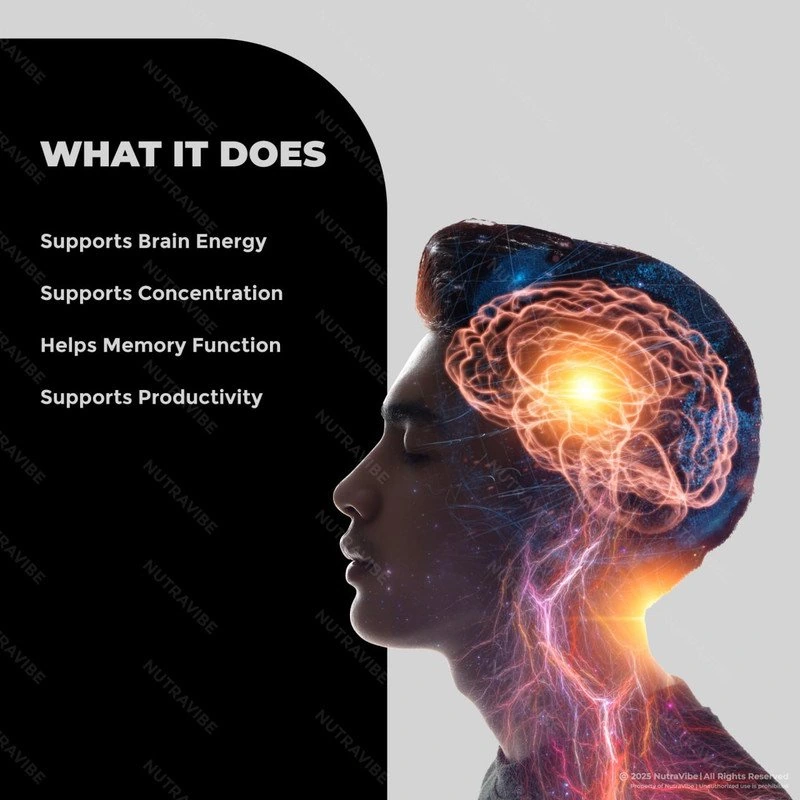
What “natural nootropic” actually means
The word nootropic gets used for everything from a cup of coffee to prescription medication. Strip away the hype and it simply describes something taken to support aspects of mental performance — focus, alertness, a feeling of clarity. A natural nootropic narrows that down to ingredients that come from plants, foods and amino acids rather than a laboratory.
The regulatory frame matters as much as the botany. As the FDA explains in its overview of dietary supplements, these products are not approved for safety and effectiveness before they go on sale the way medicines are, so the burden of checking falls to the buyer.
That distinction matters because natural nootropics tend to behave differently from stimulants. Instead of a sharp spike and crash, most botanicals are used gradually, as part of a routine you keep up day after day. They are a supporting cast for good habits, not a replacement for them.
The botanicals worth knowing
You will see the same handful of plant and amino ingredients again and again on focus-supplement labels. Here is a plain-language tour of the ones that show up most often — including the actives inside the Memo Revive blend.
For each of the plants below, the National Center for Complementary and Integrative Health’s Herbs at a Glance gives a short, evidence-first summary — and for most popular botanicals its verdict is that the human research is limited or mixed.
Tongkat Ali (Eurycoma longifolia)
A root native to Southeast Asia, Tongkat Ali has a centuries-long place in traditional practice, where it is associated with energy and vitality. It is one of the more recognisable botanicals in the modern focus-and-vitality category.
Cinnamon bark (Cinnamomum verum)
True “Ceylon” cinnamon is more than a baking spice. The warming bark has been valued across culinary and wellness traditions for generations and is a familiar face in everyday botanical blends.
Apple cider vinegar
Fermented from apples, apple cider vinegar has become a daily-wellness staple. In capsule form it is an easy way to fold a long-standing folk favourite into a routine without the taste.
Garcinia Cambogia, horny goat weed, wild yam & bitter melon
These four round out the traditional side of many blends. Garcinia is a tropical fruit whose rind features in wellness formulas; horny goat weed (Epimedium) has a long history in traditional Chinese wellness; wild yam is a classic herbal root; and bitter melon is a garden gourd used across traditional kitchens.
Raspberry ketones & L-Lysine
Raspberry ketones are the aromatic compound behind a raspberry’s scent, a popular modern addition. L-Lysine is an essential amino acid — one the body cannot make on its own — often used as a foundational building block in a formula.
Want all of these in one daily capsule?
Memo Revive brings nine plant and amino actives together in a named 1,000 mg blend — two capsules a day, backed by a 60-day guarantee.
See Memo Revive PackagesWhy a “named blend” beats a mystery formula
Supplement labels fall into two camps. Some hide behind a single, unnamed “proprietary” word. Others print every ingredient by name, even when the individual amounts sit inside a blend. The second kind is far easier to evaluate: you can research each botanical, check for anything you want to avoid, and talk it over with a professional.
Memo Revive sits in that second camp. Its 1,000 mg blend is proprietary in the sense that per-ingredient milligrams are not broken out, but every one of the nine actives is listed on the panel — and the serving size, other ingredients and daily use are all spelled out.
How to build a daily focus routine
No capsule works in a vacuum. If you want the best shot at steady focus, treat a supplement as one layer on top of the basics:
Each of those four lines has a guide of its own on this site, because each one does more for daily focus than any capsule does. Sleep is the largest single lever, and how sleep affects memory and focus explains what the brain is actually doing overnight. Fluid comes next: does dehydration affect your brain covers how quickly mild fluid loss shows up as dulled attention. Movement is covered in does exercise improve memory and brain function. And if none of that touches the problem, what causes poor concentration works through the everyday explanations one at a time.
- ✓ Sleep first. Nothing out-performs a consistent sleep schedule for next-day focus.
- ✓ Hydrate early. Even mild dehydration nudges attention and energy in the wrong direction.
- ✓ Move and get light. A short walk and morning daylight both help set an alert rhythm.
- ✓ Add the supplement consistently. Take it at the same time each day so it becomes automatic.
That last point is the one people miss. Botanicals reward consistency, so pick a cue you already have — breakfast, your first glass of water, brushing your teeth — and attach the capsules to it.
Traditional use is not the same as evidence
Traditional use tells you that a plant has been taken for a long time by a lot of people; it does not tell you that it works, or how much of it does anything. Those are separate claims, and supplement marketing habitually blurs them by describing centuries of use in the same breath as a modern benefit. When you read that a botanical has been “used for generations to support vitality”, the historical half of that sentence is usually well documented and the benefit half is usually the part that has never been tested in a controlled trial.
Two further gaps are worth knowing about before you spend money. The first is dose: a plant studied at one extract strength tells you very little about the same plant at a different strength, and a proprietary blend that publishes only a combined total makes that comparison impossible by design. The second is the finished product: research is almost always run on a single isolated ingredient, never on the specific multi-ingredient formula in the bottle, so no blend on the market can honestly point at a trial and say “this is us”.
None of that makes botanicals worthless. It makes them modest — a reasonable, low-drama layer on top of habits that carry the real weight, and a poor substitute for any of them.
What natural nootropics cannot do
A natural nootropic is a food-derived supplement, which means it is legally and practically not a treatment for anything. It cannot diagnose, treat, cure or prevent a disease, and no honest label will claim otherwise. That boundary is worth stating plainly, because the gap between “supports everyday focus” and “fixes my memory problem” is exactly where people waste money and, occasionally, delay getting help they need.
- ✓ It will not replace sleep. No capsule has ever bought back an hour of a short night, and the effects of a run of them build up.
- ✓ It will not out-run stress. A workload that never lets up will overwhelm any supplement in the routine.
- ✓ It will not explain a new symptom. A change in memory or concentration that is sudden, worsening or unlike you belongs with a clinician, not a shopping basket.
- ✓ It is not automatically safe because it is natural. Herbs interact with medicines, and “plant-derived” says nothing about what a plant does alongside a prescription.
Read against that list, a botanical blend becomes easy to judge: it is a small, optional, low-cost habit that sits at the top of a stack of much larger ones. If a product is sold to you as anything more than that, the marketing has left the evidence behind.
What to look for on a label
Before you buy any focus supplement, run this quick checklist: Are the ingredients named? Is the serving size clear? Are the “other ingredients” reasonable? Is there manufacturing and contact information? And is the marketing honest — supporting everyday wellness rather than promising to cure anything? A product that passes those checks, like Memo Revive, is simply easier to trust.
Where an ingredient is a vitamin, a mineral or an amino acid rather than a herb, the NIH Office of Dietary Supplements’ nutrient and supplement fact sheets will tell you what it does and who is realistically likely to be short of it.
Frequently asked questions
What is a natural nootropic?
A natural nootropic is a plant-derived or naturally occurring ingredient used to support aspects of everyday mental performance such as focus, energy or a sense of clarity. Unlike synthetic compounds, these come from foods, herbs and amino acids with long histories of traditional use.
Do botanical focus supplements work instantly?
Generally no. Botanicals are best thought of as a steady, daily habit rather than an on-demand switch. Most people take them consistently for several weeks as part of a broader routine that also covers sleep, hydration and movement.
What should I look for on a nootropic label?
Look for ingredients listed by name, a clear serving size, an honest set of other ingredients, and manufacturing details. A named blend that tells you what is inside is easier to evaluate than a vague, unnamed formula.
Is Memo Revive a natural nootropic?
Memo Revive is a two-capsule daily supplement built on a named 1,000 mg botanical blend that includes Tongkat Ali, cinnamon bark, apple cider vinegar and more. It is positioned as a botanical companion for everyday focus, not a medical treatment.
References
- National Institutes of Health, Office of Dietary Supplements — Dietary Supplement Fact Sheets. ods.od.nih.gov
- U.S. Food & Drug Administration — Dietary Supplements overview. fda.gov
- National Center for Complementary and Integrative Health — Herbs at a Glance. nccih.nih.gov
† These statements have not been evaluated by the FDA. This product is not intended to diagnose, treat, cure or prevent any disease. This article is for general information only and is not medical advice. Individual results vary.