Home › Blog › How Sleep Affects Memory & Focus
Sleep & Brain HealthHow Sleep Affects Memory and Focus
| The idea | Sleep is when your brain files the day’s memories and clears out the clutter, so the night before shapes how well you think today. |
| Why it matters | Deep sleep locks in facts and skills; REM sleep helps make sense of them — skip either and recall and focus suffer. |
| What helps | A steady sleep-wake time, a wind-down routine, morning light, and easing off caffeine, screens and late meals. |
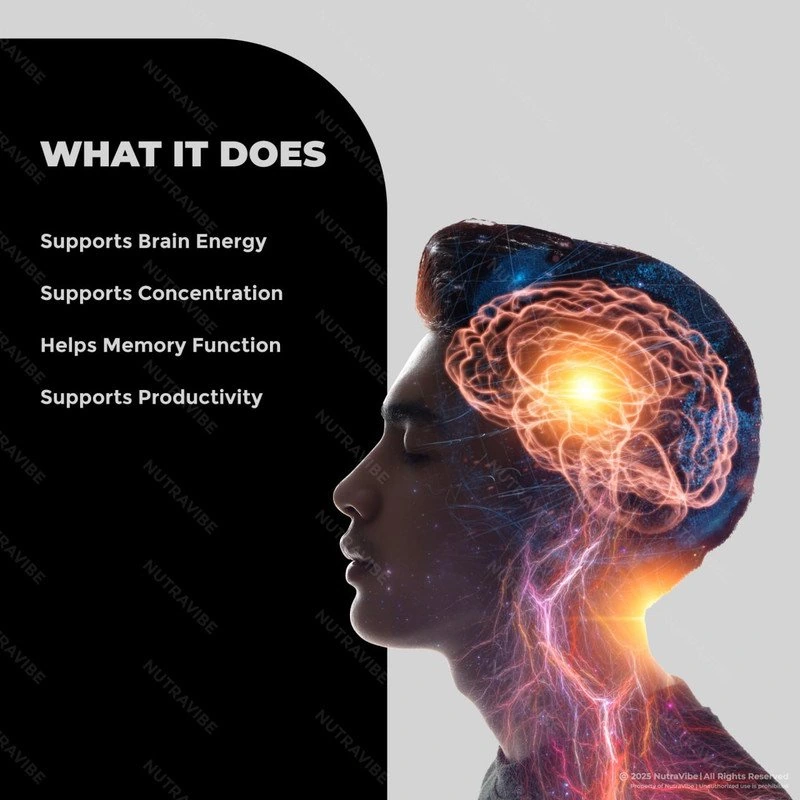
If you have ever pulled a short night and spent the next day rereading the same sentence, misplacing your keys and reaching for words that would not come, you already know the answer to the question at the heart of this guide. Understanding how sleep affects memory and focus turns that daily experience into something you can actually work with. Sleep is not downtime for the brain — it is one of its busiest and most important shifts, and it is when much of the real work of learning, filing and clearing actually happens. This guide walks through what your brain is doing while you sleep, what goes wrong when you cut it short, and the practical daily habits that protect both your rest and your thinking.
Why sleep is a memory-making shift, not just rest
During the day your brain takes in a flood of information — conversations, tasks, faces, facts, routes, feelings. Most of that is held loosely at first, in a kind of temporary inbox. Overnight, the brain sorts through that inbox, decides what is worth keeping, and moves the keepers into more stable, long-term storage. Scientists call this process memory consolidation, and it is one of the clearest examples of how sleep affects memory and focus from one day to the next. When you sleep well, you wake up with yesterday’s important moments more firmly filed and your mental desk cleared for a new day. When you do not, the filing stays half-finished.
The clearest short primer on this is the National Institute of Neurological Disorders and Stroke’s Brain Basics: Understanding Sleep, which describes sleep as an active, structured process rather than the brain simply switching off.
There is a housekeeping side to this too. While you are awake, normal brain activity produces metabolic by-products that gradually build up. Sleep appears to be the main window in which the brain flushes these away, a bit like a cleaning crew that can only work properly once the building is quiet. That clean-out is part of why a good night leaves you feeling clear-headed and a bad one leaves you feeling foggy — a feeling we look at more closely in our guide to brain fog causes and how to clear it naturally.
The stages of sleep and what each one does for the mind
A night of sleep is not one flat state. You move through cycles of roughly ninety minutes, and each cycle contains different stages that seem to serve different mental jobs. This is why simply being in bed is not the same as getting the sleep your brain needs — you want to complete enough full cycles for each stage to do its part.
Deep (slow-wave) sleep
Deep sleep dominates the earlier part of the night. This is the stage most associated with locking in facts and events — the name of someone you met, a passage you studied, a new procedure at work. It is also the most physically restorative stage. Cut your night short at the front end by going to bed too late, and you still get some deep sleep; cut it short at the back end and you shortchange the next stage.
REM sleep and dreaming
REM (rapid eye movement) sleep becomes more prominent in the later hours, especially in the final stretch before you would naturally wake. REM is linked with weaving new information together with what you already know, processing emotion, and supporting creativity and problem-solving. Because REM loads toward the end of the night, waking two hours early does not just cost you two hours of sleep — it can disproportionately cut into your REM, which is one reason a cut-short night can leave you feeling emotionally frayed as well as forgetful.
What one bad night actually does to focus
You do not need weeks of poor sleep to feel the effect. After a single short or broken night, most people notice a familiar cluster of changes: reactions slow down, attention drifts more easily, and the working memory you rely on to hold a phone number or follow a multi-step instruction becomes shaky. Small lapses multiply — walking into a room and forgetting why, rereading, losing the thread of a conversation. If any of that sounds like your daily reality, our piece on why you can’t focus and the causes of poor concentration covers the wider picture, of which sleep is often the biggest single piece.
Mood takes a hit too, and mood and focus are closely linked. A tired brain is quicker to feel irritable, anxious or overwhelmed, and those states make it even harder to concentrate. This is the vicious circle many people know well: a poor night makes the day harder, the hard day makes it tough to switch off, and switching off late sets up the next poor night.
When short nights become a habit
An occasional bad night is normal and nothing to worry about. The bigger issue is chronic short sleep — routinely running on less than your body needs, night after night. People often adapt to feeling tired and stop noticing quite how much it is costing them, but the effects on attention, learning and steady thinking quietly accumulate. If you find yourself constantly misplacing things or blanking on names, it is worth reading why am I so forgetful and the everyday causes of memory lapses, because insufficient sleep sits near the top of that list far more often than people expect.
The CDC’s sleep health guidance puts the adult target at seven or more hours a night, and frames chronic short sleep as a health issue in its own right rather than a personal quirk.
A steady daytime companion for focus
Memo Revive is a two-capsule daily botanical blend for everyday focus and mental-energy support — a daytime layer on top of good sleep, not a sleep aid. Backed by a 60-day guarantee.
See Memo Revive Packages
Daily habits that protect your sleep — and your memory
The good news is that sleep responds well to routine. You cannot force yourself to sleep, but you can build the conditions that make good sleep far more likely. These are the habits worth putting first.
- ✓ Keep a steady sleep-wake time. Going to bed and waking at roughly the same hours — including weekends — is the single most powerful signal to your body clock, and it protects the later-night REM that a lie-in-then-crash pattern disrupts.
- ✓ Get morning light. Daylight early in the day anchors your body clock and makes it easier to feel sleepy at the right time that night. A short walk outside beats any amount of indoor lighting.
- ✓ Set a caffeine curfew. Caffeine lingers for many hours, so an afternoon coffee can still be working against you at bedtime. Try keeping it to the first half of your day.
- ✓ Wind down on purpose. Give yourself thirty to sixty minutes of low-stimulation time — dim lights, a book, a shower — so your brain gets the message that the day is closing.
- ✓ Park the screens. Bright, engaging screens late at night delay sleep on two fronts: the light and the mental stimulation. Even a small buffer before bed helps.
- ✓ Keep the bedroom cool, dark and quiet. A slightly cool, properly dark room is easier to sleep deeply in than most people realise.
The daytime habits that feed better nights
Sleep quality is not decided only at bedtime; it is shaped by how you spend your day. Regular movement, natural light and a steady rhythm of meals all make it easier to fall asleep and stay asleep. In particular, physical activity earlier in the day is one of the most reliable ways to deepen sleep — a link we explore in does exercise improve memory and brain function. Managing daytime stress matters too, because a mind still racing at 11pm is often a mind that never got to decompress earlier; our guide to whether stress affects memory and how to manage it goes deeper on that connection.
Watch the late, heavy meal and the nightcap as well. Eating a large meal close to bedtime can disrupt sleep, and while alcohol may help you drop off, it fragments sleep later in the night and blunts REM — exactly the stage you want to protect for memory.
Sleep and learning: how to study smarter
If you are learning something — for exams, a new language, a skill at work — sleep is a genuine part of the study process, not an interruption to it. Reviewing material and then sleeping on it helps consolidate what you learned, which is why an all-nighter is usually a poor trade: you gain a few hours of tired, low-quality cramming and lose the very sleep that would have helped the material stick. Spacing your learning across several days, each followed by a proper night’s sleep, is far more effective than one heroic, sleepless session. A short review before bed and another the next morning takes advantage of the overnight filing your brain does for free.
Three sleep myths worth dropping
Sleep advice is full of half-truths, so it is worth clearing a few away.
Myth: you can catch up on lost sleep at the weekend
A weekend lie-in can ease some of the tiredness from a short week, but it does not fully reverse the effects of chronic short sleep, and the swing in timing can leave you groggy and out of sync by Monday. Consistency beats catch-up.
Myth: some people genuinely thrive on four hours
The number of people who truly function well on very little sleep is vanishingly small. Most who believe they have adapted have simply got used to running tired and no longer notice the cost to their focus and memory.
Myth: a nightcap helps you sleep
Alcohol can make you drop off faster, but it worsens the quality of the sleep that follows — more waking in the small hours and less restorative REM. As a memory aid, it works against you.
Where a supplement fits alongside good sleep
Sleep is the foundation, and no supplement replaces it. Once your sleep habits are solid, some people like to add a consistent daytime botanical as a supporting layer for focus and mental energy. That is the role Memo Revive is designed for — a two-capsule morning routine, not a sleep aid or sedative. If you are curious about the individual plant actives, our guide to natural nootropic botanicals for focus and memory walks through them. A supplement is a companion to healthy sleep, not a substitute for it, and not a treatment for any condition.
Nothing on a supplement label replaces an hour of sleep. For any botanical sold for calm or for focus, the National Center for Complementary and Integrative Health’s Herbs at a Glance is the honest baseline.
A note on expectations
Better sleep pays off steadily rather than overnight. Give a new routine a couple of weeks before you judge it, and focus on consistency over perfection — the occasional late night will not undo your progress. Persistent sleep problems, loud snoring with pauses in breathing, or daytime sleepiness that does not lift despite adequate time in bed are worth discussing with a qualified healthcare professional, as they can point to conditions that deserve proper attention. This article is general information, not medical advice tailored to you.
Sleeping better and want a steady daytime companion for focus? Explore the Memo Revive packages here.
Frequently asked questions
How does sleep affect memory and focus?
Sleep is when the brain files what you learned during the day, moving it from short-term holding into longer-term storage, and clears metabolic by-products that build up while you are awake. A good night supports sharper recall and steadier focus; a poor night tends to leave attention fragile and memories half-filed.
How many hours of sleep do adults need for good memory?
Most adults do best on seven to nine hours a night, though the exact figure varies from person to person. What matters as much as total hours is consistency and getting through complete sleep cycles, since both deep sleep and REM sleep play different roles in memory.
Can one bad night of sleep affect my thinking the next day?
Yes. After a single short or broken night most people notice slower reactions, a shorter attention span and more tip-of-the-tongue moments. This is usually temporary and lifts once you catch up, but repeated poor nights make the effect harder to shake off.
Do naps help memory and focus?
A short nap of about ten to twenty minutes early in the afternoon can refresh alertness and give a modest lift to learning for many people. Longer or late naps can leave you groggy and make it harder to fall asleep at night, so timing matters.
Does Memo Revive help you sleep?
Memo Revive is a daytime two-capsule botanical blend for everyday focus and mental-energy support; it is not a sleep aid or a sedative. Good sleep habits come first, and a supplement is a companion to them, not a replacement, and not a treatment for any condition.
We are an independent team writing plain-language guides on everyday focus, memory and mental energy. We favour habits and honest, general information over hype, and we always point readers toward a qualified professional for anything medical. Content is reviewed for accuracy and compliance before it is published.
References
- National Institute of Neurological Disorders and Stroke — Brain Basics: Understanding Sleep. ninds.nih.gov
- Centers for Disease Control and Prevention — About Sleep and Sleep Health. cdc.gov/sleep
- National Center for Complementary and Integrative Health — Herbs at a Glance. nccih.nih.gov
† These statements have not been evaluated by the FDA. This product is not intended to diagnose, treat, cure or prevent any disease. This article is for general information only and is not medical advice. Individual results vary.